SUBARU 91151AE000MV Wagon Roof Rack Rails Luggage
fits model: Outback. make: Subaru. year: 2000–2004.
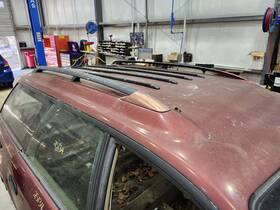
( Manufacturer Part Number: 91151AE000MV ), ( Part Type: Rack ), ( Id: 5278f7b9-7cb8-422d-8dda-a3a4f3add388 ), ( Year: 03 )
Review SUBARU Wagon Roof Rack Side Rails Luggage Genuine Oem fits OUTBACK 2000–2004
The **Subaru Outback (91151AE000MV, 2000 2004 model years) Roof Rail Luggage System** is a meticulously engineered accessory designed to enhance the utility and versatility of your Outback wagon without compromising its iconic, rugged aesthetic. This high-quality roof rack system is crafted to seamlessly integrate with the factory-installed roof rails, providing a sturdy and secure platform for transporting a wide range of gear, from compact luggage and kayaks to roof boxes and cargo carriers. Engineered with precision, the rails feature a durable aluminum construction that resists corrosion and withstands the elements, ensuring long-lasting performance even in harsh conditions. The system is designed to distribute weight evenly across the vehicle s roof, minimizing drag and maintaining optimal aerodynamics while maximizing stability at highway speeds. Whether you re embarking on a weekend camping trip, a cross-country road adventure, or a family vacation, this roof rack system offers a practical solution for expanding your Outback s cargo capacity without the need for bulky aftermarket modifications. Its clean, unobtrusive design preserves the vehicle s sleek silhouette, blending functionality with Subaru s signature rugged elegance. Built to accommodate a variety of compatible carriers, crossbars, and accessories, this roof rail luggage system is an essential upgrade for owners seeking to unlock the full potential of their Outback s open-air versatility.
### Pros and Cons of Buying a 2000-2004 Subaru Outback Wagon (91151AE000MV) with Roof Rack Rails and Luggage
#### **Pros**
1. **Reliability and Durability**
The 2000-2004 Subaru Outback is known for its robust build quality and durability, especially in harsh weather conditions. Subarus of this era were engineered to handle snow, rain, and rough terrain, making them a practical choice for all-season driving.
2. **Spacious Interior and Cargo Capacity**
The Outback wagon design provides a large cargo area, even with the roof rack rails installed. The sliding doors and high roof contribute to a roomy cabin, making it ideal for families, outdoor enthusiasts, or those who frequently carry gear like camping equipment, skis, or luggage.
3. **Standard All-Wheel Drive (AWD)**
AWD is standard on all Outbacks from this era, which enhances traction in slippery or uneven conditions. This is particularly useful for drivers who frequently encounter snow, mud, or off-road situations.
4. **Roof Rack Rails and Luggage Compatibility**
The presence of roof rack rails means you can easily add a roof box or cargo carrier, significantly increasing storage capacity. This is a major advantage for travelers, hikers, or anyone who needs extra space without sacrificing interior comfort.
5. **Good Resale Value for the Era**
Subarus from this generation hold their value relatively well compared to some competitors, especially when well-maintained. The Outback s reputation for reliability contributes to this.
6. **Comfortable Ride and Handling**
The Outback offers a smooth ride on highways and nimble handling for its size, thanks to Subaru s boxer engine and AWD system. The suspension is tuned for both comfort and control.
7. **Affordability**
Compared to newer models, a 2000-2004 Outback is significantly cheaper to purchase, making it an attractive option for buyers on a budget. Parts and maintenance costs are also generally lower than those of modern vehicles.
8. **Proven Engine Options**
The Outback was available with either a 2.5L or 3.0L naturally aspirated boxer engine (or a turbocharged 2.2L in later models). The 2.5L and 3.0L engines are known for their longevity and simplicity, though the turbo option (introduced in 2003) offers more power at the cost of slightly higher maintenance.
9. **Easy to Modify and Maintain**
The Outback s design makes it straightforward to perform basic maintenance tasks like oil changes, brake jobs, or tire rotations. The engine bay is accessible, and many repairs can be done at home with minimal tools.
10. **Off-Road Capabilities**
While not a dedicated off-roader, the Outback s AWD, ground clearance, and rugged construction allow it to handle light off-road conditions, such as gravel roads or snow-covered trails, better than many competitors.
---
#### **Cons**
1. **Aging Technology and Safety Features**
The 2000-2004 Outback lacks modern safety features like advanced airbag systems, electronic stability control (ESC), or modern driver-assistance technologies (e.g., lane-keeping assist, adaptive cruise control). These systems were not standard until later models.
2. **Fuel Efficiency**
The naturally aspirated engines (especially the 3.0L) are not fuel-efficient by today s standards. Expect around 18-22 MPG in the city and 24-28 MPG on the highway, which is lower than modern hybrids or turbocharged engines.
3. **Rust Concerns**
Subarus from this era are prone to rust, particularly in the wheel wells, rocker panels, and undercarriage. Rust can compromise structural integrity if not addressed early. A thorough inspection of the undercarriage and body panels is critical before purchasing.
4. **Interior Wear and Tear**
The interior materials (e.g., cloth upholstery, plastic trim) show signs of aging more quickly than modern synthetic fabrics. The dashboard and center console may feel dated or worn, especially in higher-mileage examples.
5. **Reliability of the Turbocharged Engine (2003-2004 Models)**
The 2.2L turbocharged engine, introduced in 2003, is more complex and prone to issues like turbo failure, oil leaks, or timing chain wear if not properly maintained. The naturally aspirated engines are more straightforward but less powerful.
6. **Limited Modern Conveniences**
Features like power-adjustable seats, heated steering wheels, or advanced infotainment systems are absent. The radio and climate controls are basic by today s standards, and Bluetooth or USB connectivity is not available.
7. **Higher Maintenance Costs Over Time**
While parts are affordable, labor costs can add up, especially if the vehicle requires work on the AWD system, suspension, or transmission. Regular maintenance (e.g., fluid changes, timing belt replacement) is essential to avoid costly failures.
8. **Resale Value Decline**
While the Outback holds value better than many contemporaries, its resale value will not match that of a newer vehicle. If you plan to upgrade in a few years, the depreciation should be factored into your budget.
9. **Potential for Electrical Issues**
Older Subarus can develop electrical gremlins, such as faulty sensors, alternator problems, or wiring issues. These can be tricky and expensive to diagnose and repair.
10. **Limited Availability of Modern Parts**
While basic parts are still widely available, some aftermarket or specialized components (e.g., modern tires, sensors, or electronics) may require sourcing from third-party suppliers.
---
### **Conclusion**
The 2000-2004 Subaru Outback wagon with roof rack rails and luggage compatibility is an excellent choice for buyers who prioritize **practicality, durability, and off-road capability** over modern convenience and fuel efficiency. It excels as a **family vehicle, adventure car, or work truck**, especially for those who frequently carry gear or travel in rugged conditions. The presence of roof rack rails adds significant value for outdoor enthusiasts or travelers.
However, the trade-offs **aging safety features, lower fuel economy, potential rust issues, and higher long-term maintenance costs** mean this vehicle is best suited for buyers who:
- Are willing to perform regular maintenance.
- Don t require cutting-edge technology or safety features.
- Prefer a no-frills, rugged vehicle over a luxury or tech-packed car.
- Can accept slightly higher running costs in exchange for reliability and space.
If you re looking for a **budget-friendly, all-weather, cargo-hauling machine** that can last for many miles with proper care, the 2000-2004 Outback is a solid pick. But if you need a vehicle with modern safety, efficiency, or comfort features, a newer model would be a better investment.
---
### **Recommendation**
**Buy the 2000-2004 Subaru Outback if:**- You need a **spacious, AWD wagon** for family use, camping, or hauling gear.
- You re comfortable with **basic maintenance** and can inspect the vehicle thoroughly for rust and mechanical issues.
- You prioritize **durability and reliability** over fuel efficiency or modern tech.
- You plan to **use roof rack rails** for additional cargo capacity.
**Avoid or proceed with caution if:**- You require **advanced safety features** (e.g., ESC, multiple airbags, backup cameras).
- You frequently drive **long distances** and want better fuel economy.
- You re sensitive to **outdated interior materials** or lack of modern amenities.
- The vehicle has **visible rust, poor maintenance history, or a high-mileage turbo engine**.
**Final Verdict:**This Outback is a **great value for the right buyer** someone who wants a **practical, rugged, and versatile wagon** without the premium price tag of a newer model. With careful inspection and maintenance, it can serve as a dependable vehicle for years. However, buyers should be prepared for **higher long-term costs and compromises on modern comforts**. If you can find one in good condition, it s a worthwhile purchase for the right use case.
Details:
Model: SUBARU LEGACY. Vehicle Mileage: 0cc. Vehicle Info: RED EXT,PAINT CODE 18X,4DR,PROD DATE 05/03,BEIGE INT,TRIM BEI,2.5L,AUTO TRANS,AWD. Part Stock #.
Vehicle Stock #: 25134.
part #: 91151ae000mv prices
- $89.99-$249.99
specifications azcarracks:
- for models: Outback
- for makes: Subaru
- for years: 2000-2004
- mpn: 91151ae000mv
- part type: Rack
- id: 5278f7b9-7cb8-422d-8dda-a3a4f3add388
- year: 03
general azcarracks:
- Car Truck Parts Accessories > Racks Cargo Carriers > Roof Racks Cross Bars
- condition: Used
offer azcarracks:
- quantity: 1
- best offers: True
- options: Ship-to-home
- started: May 24, 2026
- availability: In Stock
- sold: 0
seller azcarracks:
- rating: 99.8%
- # reviews: 21014
- city: Asheville, North Carolina
payments azcarracks:
- other
- credit card: Mastercard
- wallet: Apple-pay
returns azcarracks:
- paid by: Seller
- time: 30 Days
- policy: Returns Accepted
shipping azcarracks:
- service: Standard
- type: Fixed
- class: Standard
- transit: 5-10 Days
- cost: $0.00
Subaru 91151AE000MV Is Similar To:
- Forester Crosstop Towers 1998 0121 Rack Subaru Yakima 2002 Roof Prices (23.7% similar) Set of 4 towers and 4 end caps cross bars not included lockable with Saks lock cores sold separately up to 125 lb load capacity fits subaru forester with factory installed side RAILS1999 subaru forester with factory installed side RAILS2000 subaru forester with factory installed side RAILS2001 ...(November 3rd, 2014)
- 03-08 Subaru Forester Pair Roof (23.4% similar) ...(December 18th, 2017)
- 11 12 13 Subaru Outback (27.2% similar) Chips turbos or other non factory ad INS will void you warranty. If an item arrives damaged, please via messaging system within 24 hours for instructions. Fluid disposal charge. Most engines do not come with intake or exhaust manifolds, turbos, superchargers. Special heat tabs are installed in the ...(September 2nd, 2017)
- 123803 Subaru 2008-14 Impreza Outback (32.5% similar) Excellent condition, taken from a working car. This is the front rail. Ready to go. The rear rail is a different design and listed separately...(January 29th, 2018)
- 126628686 126628687 10 11 Subaru Legacy Pair 2 Roof Luggage Rack Side Rails Bars Oem Lkq 91150 91149 (43.3% similar) ...(April 15th, 2016)
- Subaru 137cm 54 Ski Kit Rack Locks Bike Crossbars Roof Tribeca Attachment (33.5% similar) Subaru tribe ca 54 137CM roof rack crossbars locks kit for ski bike attachment parts SUV 891 fitment subaru pair 54 137CM length universal roof rack cross bar attach to oe factory rooftop roof top rail brand new in box installation hardware mounting accessories included ultra light weight 3MM ...(October 17th, 2014)
- 148.su1r11 11 12 13 Subaru Outback (24.6% similar) Halberd inc. What you see in the pictures is will get. Our address is 5851 alder ave. If an item arrives damaged, please via messaging system within 24 hours for instructions. Some scratches are not visible to the camera. Some items may have scratches, scuffs and or dents due to regular wear tear...(February 16th, 2017)
- 15 16 17 Subaru Outback (27.2% similar) Engine or transmission must go into a factory oem vehicle. Special heat tabs are installed in the event an engine is over heated. Some items may have scratches, scuffs and or dents due to regular wear tear. If engine or transmission is not needed, buyer pays any and all return original shipping ...(January 15th, 2018)
- 15 16 Subaru Outback Legacy (33.6% similar) Fluid disposal charge. Our address is 5851 alder ave. What you see in the pictures is will get. If engine or transmission is not needed buyer pays any and all return costs. Most engines do not come with intake or exhaust manifolds, turbos, superchargers. Halberd inc. Special heat tabs are installed ...(September 28th, 2017)
- 15-16 Subaru Outback Legacy Luggage (45.2% similar) Halberd inc. On some items hardware is not included. What you see in the pictures is will get. Some items may have scratches, scuffs and or dents due to regular wear tear. Our address is 5851 alder ave. Some scratches are not visible to the camera. If an item arrives damaged, please via messaging ...(May 6th, 2017)
- Outback 1994 Luggage Crossbars Subaru Cross Prices Rack Cargo Bars Roof (25.2% similar) This is a set of cross bars from a 1994 subaru outback comes with 2 bars...(October 3rd, 2014)